|
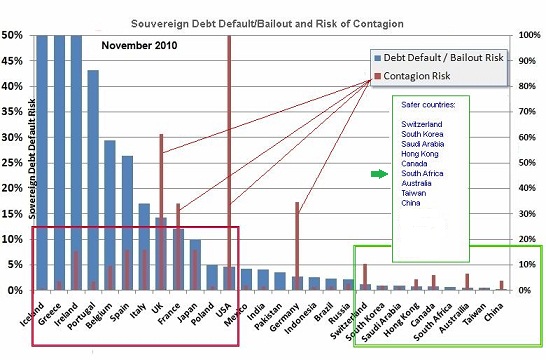
Updated July 1, 2011 - There are very few
options to deal with the overwhelming debt burden in most countries: raise
taxes, cut spending, increase growth, or print money. Guess which one is
more likely? Inflation from currency dilution is baked in the cake and
will spur further gold demand and light a fire under the price.
|
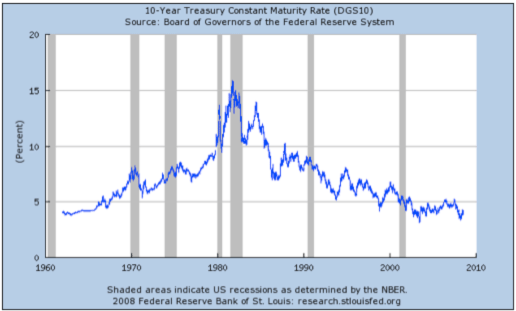
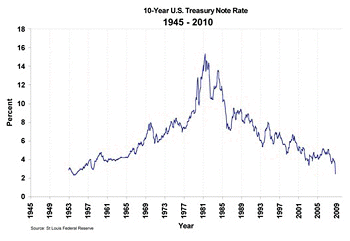
10-Year U.S.
Treasury Note Rate |
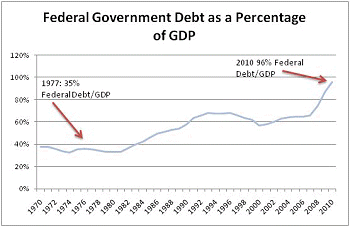
Federal
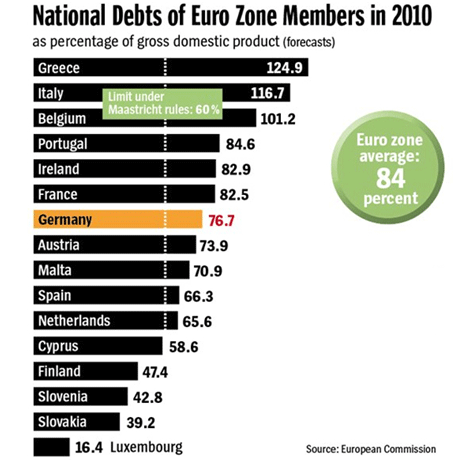
Government Debt as a % of Gross Domestic Product |
|
|
|
 |
 |
|
A historic
bottom |
|
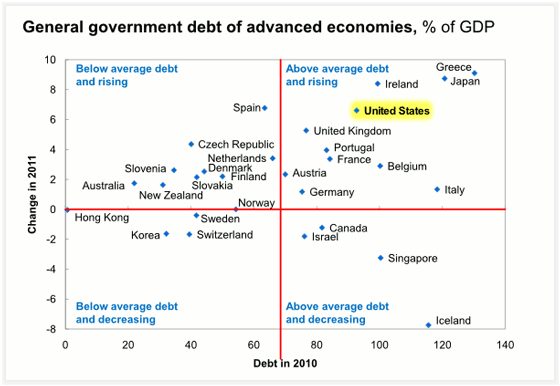
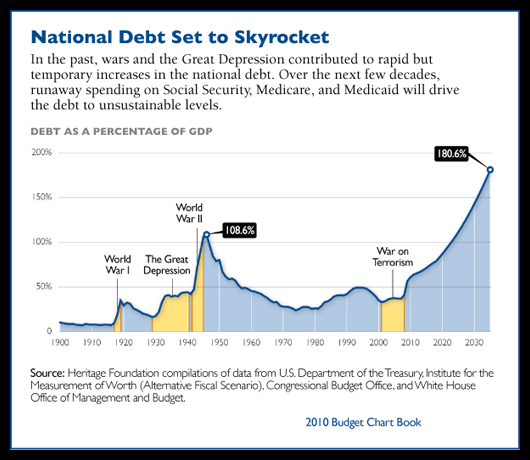
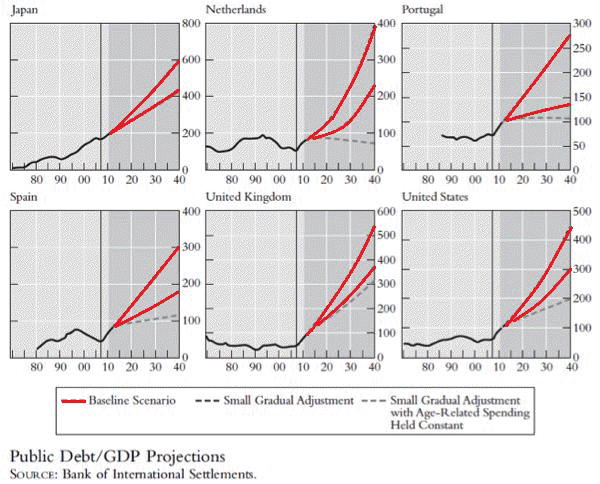
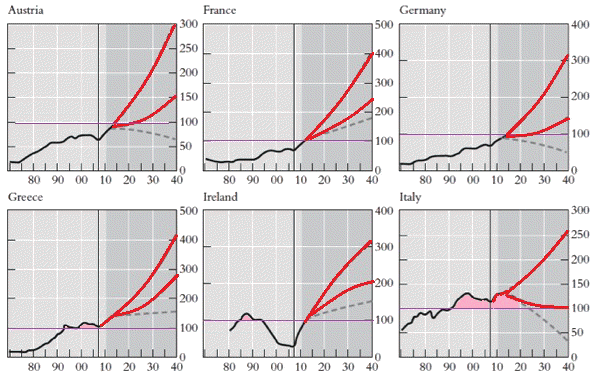
February 14, 2011 - Public debt to Gross Domestic
Product - The Debt is the problem, not the economy. Once public debt is
100% and more of GDP there is a VERY SERIOUS problem.
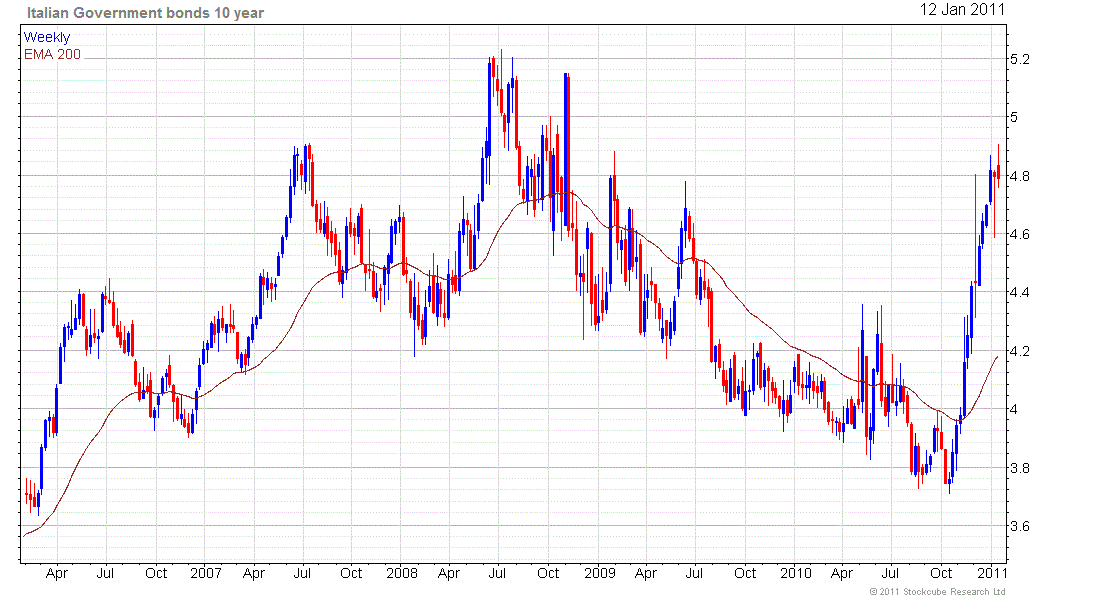
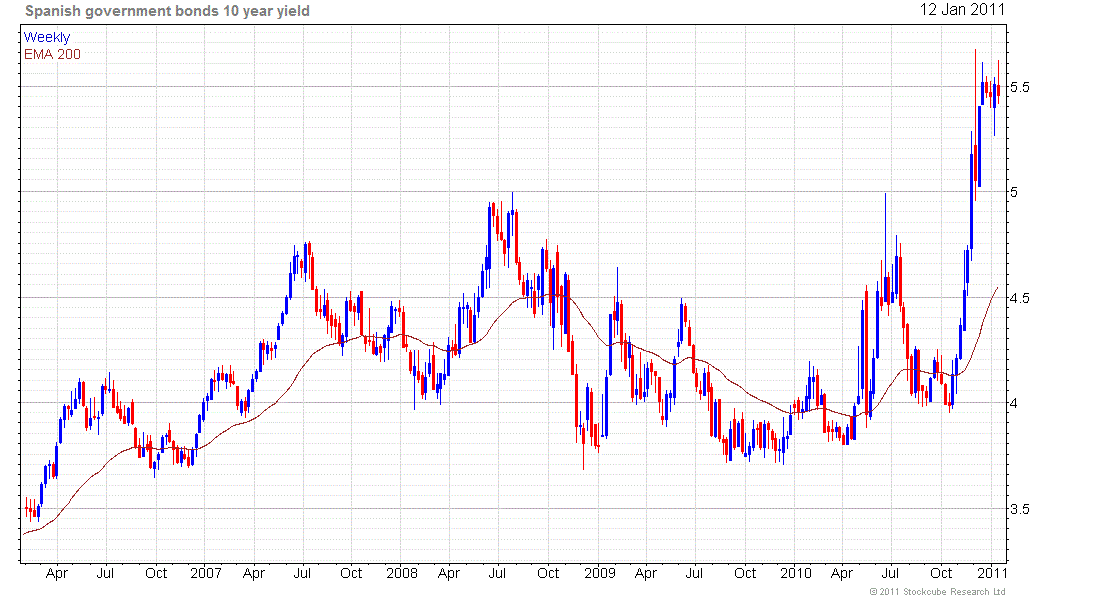
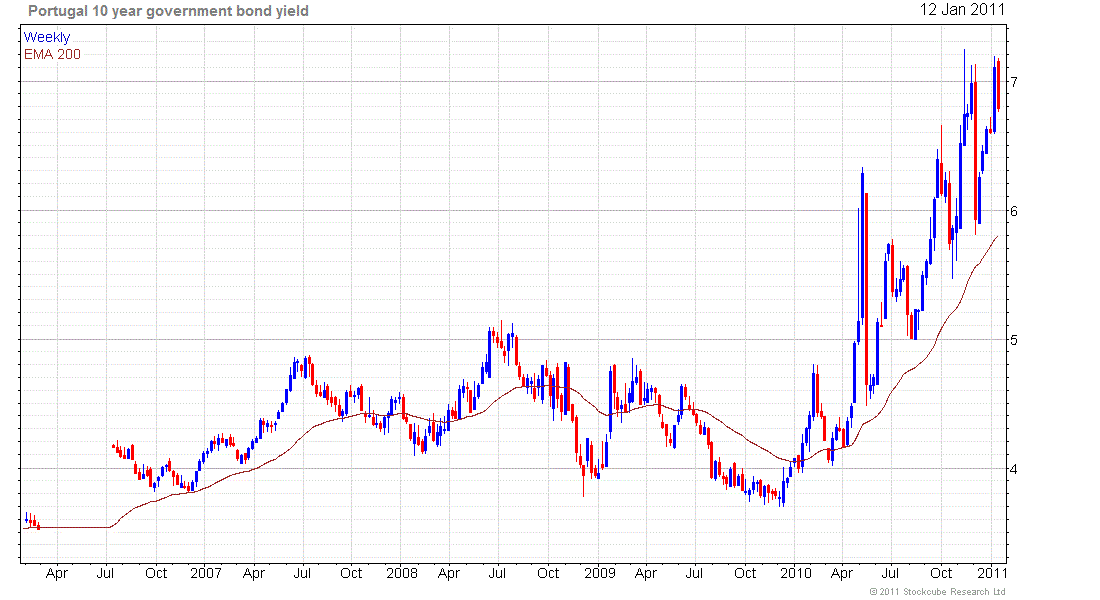
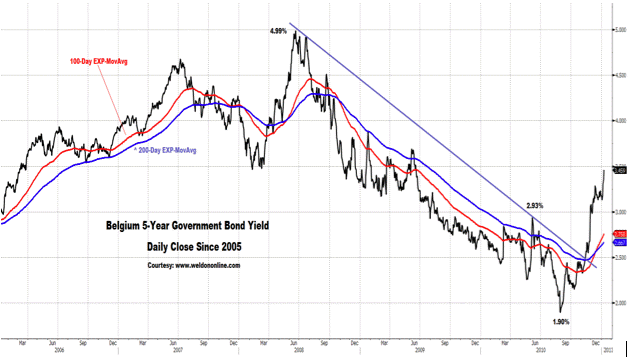
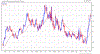
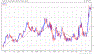
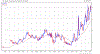
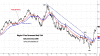
January 13, 2011 - This is how fast long term interest rates rise in
Italy, Spain and Portugal. Rising long term interest
rates are the prelude to a default of Greece, Portugal and Spain...BEFORE
these countries do, they will have to leave the EURO.
|
Italy 10 y Gov. bond yield |
Spain 10 y Gov. bond yield |
Portugal 10 y Gov. bond yield |
Belgium 5 y Gov.
bond yield |
| |
|
|
|
|
 |
 |
 |
 |
| |
|
|
|
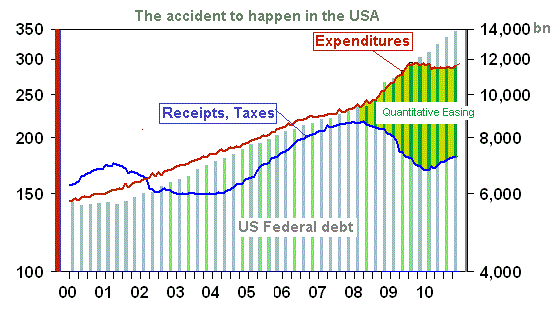
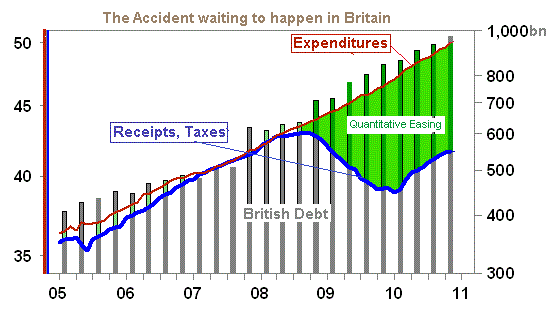
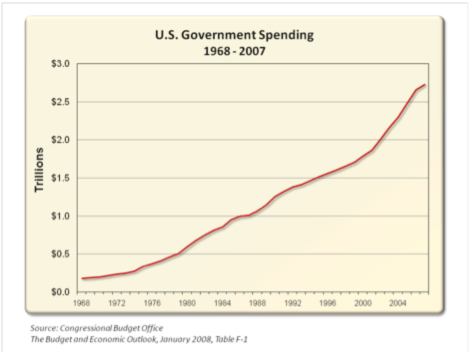
January 1, 2011 - Falling income (taxes) and rising expenditures leave the
Authorities no other choice but to print money (QE) and makes it
impossible to mob up the money.
December 18, 2010 - This is how the basic mechanism for Bonds works -
[This example doesn't take into account the yield to
maturity] -
Yield
to maturity
Assume you sign in or
buy a Bond/Treasury yielding 3% maturing in 2020 (10 years) at 100
(nominal value) and the redemption price also is 100%.
* You invest $
10,000 x 100% = $10,000 . Each year you will receive $ 300 interest.
-
If interest rates stay constant for the
next 10 years, the market value of a Bond ABC 3% 2020 will remain
the same or 100% and the nominal value paid back to the bond holder in
2020.
-
If however interest rates rise to 6%,
the market value of the 3 % ABC Bond will fall until it also yields 6% or
by 50%..
-
Each buyer of the new issued 6% XYZ bond
pays $ 10,000 x 100% = $ 10,000 and receives 6% or $ 600 interest
per year.
-
For this to happen to the 3% ABC Bond the
price has to fall until each new buyer of this 3% bond also receives
$600 interest per year. Hence the price of our 3% ABC bond has to fall by
50%, allowing each new investor to buy $10,000 x 50% x 2 = Nominal $
20,000 bonds maturing in 2020 and paying 3% . [$20,000 of our 3% ABC bond
now also pays out $600 per year].
-
If interest rates continue to rise
like is now happening in Greece (12%) , your loss becomes a lot higher.
Assuming the interest rates rise from 3% to 12% , the 3% ABC Bond
price has now to fall until it also yields 12%. For this to happen the
price has to come down to 25% . Our 1st investor (3% bond ABC
maturing in 2020) now looses 75% of his capital. At 25% each new
investor can again buy the same yearly yield of $ 1200. In this case he
will buy a nominal amount which is four times higher: $ 40,000
nominal of Bond ABC @ 3% x 25% equals a $ 10,000 investment at 3%
which yields $ 1200.
Conclusion:
-
Because interest rates in Greece have risen
to 12% in just over one year, the Bond holder has lost 75% of his savings
which he eventually may recover in 2020 IF there is no DEBT MORATORIUM
between today and 2020 (something which is highly probable). If we have a
debt moratorium the Greek (or other bonds) bonds will be rolled over for
at least another 100 years and more at the same low 3% interest rate.
-
Assuming there is no debt moratorium
(best case scenario, we'l have a runaway and/or high inflation rate of
more than 10%. In this case the loss will be: 10% - 3% per year on
the interest (-7%) and an additional 10% per year on the capital...in
other words, not even peanuts will be left in 2020.
* note:
1. This is a simple calculation method.
Yield to maturity is different and slightly better than what we show in
our example but not taken into account as it is too difficult to explain
and understand. IF we have no debt moratorium the value of our 3%
ABC bond will go up by about 7.5% each year it is closing in 2020.
2. Bonds with adjustable rate or insured
nominal rate are most of the time insured by some dangerous uncontrolled
Derivative (Credit Default Swap).
3. To calculate the yield to maturity
one must make the difference between the market and redemption price,
divide it by the number of yours until maturity and add or subtract this
figure from the calculated yield.
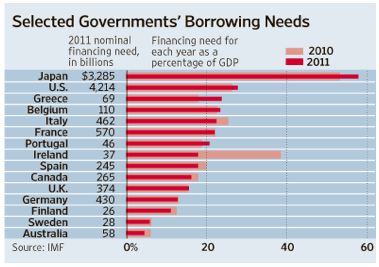
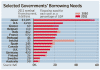
December 2, 2010 - Japan is never mentioned...but their situation is bad,
bad, bad
|
Government Borrowing needs
(click on chart to enlarge) |
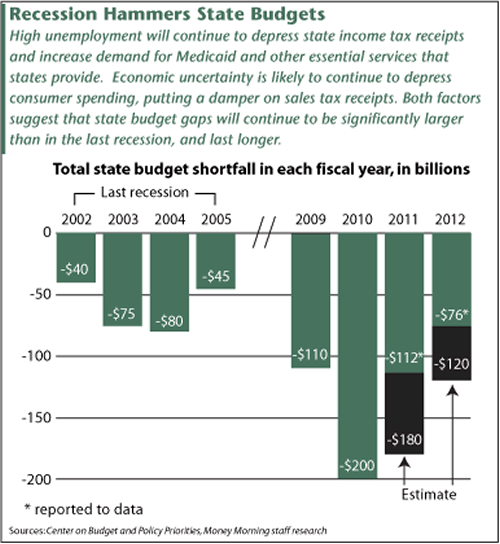
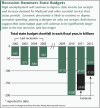
State deficits until 2012 |
|
|
|
|
 |
 |
|
 |
|
|
|
|
October 26, 2010 - The manipulation of Bonds will continue until the
system falls apart..
-
"This is still a
bumpy road," said David Schnautz, a fixed-income strategist at
Commerzbank AG in London. "This kind of news is highly market-moving and
any relief we see in terms of spreads tightening is vulnerable."
-
The yield on
Portugal's 10-year bond increased 24 basis points, the most since
Sept. 20, based on closing prices, to5.93 percent as of 3:39 p.m. in
London. That left the extra yield, or spread, investors demand to hold
the bonds instead of similar German bunds at 328 basis points.
-
Greece's
10-year yield rose 79 basis points, the most since June 15. The spread
with bunds widened to 779 basis points, the most since Oct. 1. Ireland's
10-year bonds yielded 408 basis points more than similar bunds, up from
393 yesterday.
-
Portugal's
government and the opposition Social Democrats broke off talks on the
2011 budget proposal, which include plans for the deepest cuts since at
least the 1970s. There's "no possibility of continuing" negotiations,
Eduardo Catroga, a former finance minister who represented the rival
party in the discussions, said in Lisbon today. Prime Minister Jose
Socrates, lacking a parliamentary majority, needs the largest opposition
party to back the budget or abstain for it to be passed. The Social
Democrats have opposed tax increases and called for deeper spending
cuts. Portugal sold 611 million euros ($843 million) of bonds due in
2014 today, attracting bids equivalent to 2.8 times the amount offered,
down from 3.5 times in September.
April 2010 - The way Government debt exploded over the last 10 years
and the interest rates were pushed down at the same time, is nothing more
but a big HOLDUP of the savers. Already in 2001
we started to advise our friends to get into Gold (and out of fiat paper
money and bonds).
click on charts to
enlarge
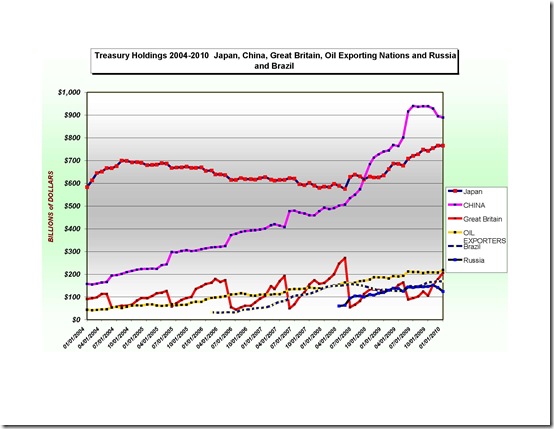
March 2010 - US Treasury holdings
Japan, China, Great Britain, OPEC, Russia and Brazil [interesting
is that the Treasury holdings of Britain (country which is virtually
bankrupt) has been going up whilst the holdings of China came down and
Japan was flat.]
February 18, 2010 -Bonds,
Gilts and Treasuries are nothing more but an option to buy worthless fiat
paper money.
Within the
next 12 months, the U.S. Treasury will have to refinance $2 trillion in
short-term debt. And that's not counting any additional deficit
spending, which is estimated to be around $1.5 trillion. Put the two
numbers together. Then ask yourself, how in the world can the Treasury
borrow $3.5 trillion in only one year? That's an amount equal to nearly
30% of our entire GDP. And we're the world's biggest economy. Where will
the money come from?
November 17, 2009
Government is growing the very Monster who
will destroy itself in the near future.
No Government has ever
paid off its debt. Government by increasing its debt consumes all
productivity of the country. In order to keep things going it wages a
war against it own manufacturing system and citizens by increasing
Taxation, Regulation and Inflation. As Capital is leaving the country
they even go after Capital which is being hidden in countries like
Switzerland and other Tax Heavens.
But as long as the
domestic situation doesn’t improve Capital continues to leave the country
and so further reduces the economic growth. This leaves the Government
with a greater deficit and even more must be borrowed and more taxes must
be voted into place (Green Taxation is better digested). It now has become
a vicious circle. This pattern will continue until the system collapses
like the USSR and China did in 1989 and Zimbabwe beginning of 2009. As the
system collapses it takes no prisoners and ‘all bond holders’ loose their
savings. Bonds and Fiat Paper money being the same ‘Assignats’ the latter
also looses its value and we have hyperinflation until it is replaced by
another instrument which is accepted by the market and a fresh cycle
starts….
In the past not only
did we see Bonds loose their value because of Hyperinflation (Weimar,
Zimbabwe) but in the end and even if we did not have a cycle of
Hyperinflation, Government repudiated on their debt or debt was erased
like it was in Zimbabwe beginning of this year. Such even happened with
Gold edged (Gold guaranteed) bonds issued by the USSR and China decennia
ago.
Today it is simply not
safe to keep your savings in Bonds. Not only do they pay a negative yield
because the Real Interest Rate is lower than the Inflation rate but Bonds
are also (because of manipulation by the Central Banks/Authorities who are
keeping interest rates artificially low) extremely expensive.
Similar
conditions apply to Bank deposits and Savings accounts and to any Fiat
Paper Money kept under your mattress.
Even worse is that
similar conditions apply for Life Insurance companies, Insurance
companies and Pension Funds as these are legally obliged to invest the
largest part of their reserves in (Government) Bonds. Not only will the
amount of retirees increase dramatically as Baby Boomers become inactive
but the means to receive decent retirement payments are being eaten away
by the REAL situation or Negative Real Interest Rates and Real Inflation.
To be safe one in fact
must keep his wealth in REAL ASSETS: commodities, Equities, Real Estate,
Gold and Silver (see our investment roster) and anything which is not
Paper Money, Paper bonds or guaranteed by these.
Updated October 27, 2009
-
2009 Government Bond auctions are failing
all over the Western world. German bond
auction failed in a warning for governments to raise record amount of
debt to stimulate the economy [January 7, 2009] and Britain
suffered its 1st failed Gilt (government bond) auction since 2002 [March 25,
2009]. In the USA the Fed is done the same and plans to monetize
$ 1050 billion by buying treasuries and Mortgage bonds.
-
Watch the parabolic runaway on
the P&F chart....January
20 the bond bubble has busted. Bonds will fall back to where this
move started in the first place. It only may take some time as the
authorities have opted for Quantitative Easing and are printing
the money they use to buy the bonds with. As a direct consequence, the
Bond markets won't be affected by the huge demand of the Authorities for
funds. Additionally, many mortgage owners see the finance cost of their
homes lowered. This should take some steam off the Real Estate markets.
The rise of interest rates is delayed, but for how long? Expect sooner
or later the hyperinflation will push them up strongly.
-
Bonds are a loose-loose situation.
Bonds ain't better than fiat paper money. Basically both are equally
DANGEROUS government debt. In the 1920's-30's most European countries
held a moratorium on their debt hereby chasing huge quantities of capital to the
US. President Roosevelt had no other option left but to call in Gold and
devaluate the Dollar by 40%. Bonds are either the subject of a moratorium
or their value is inflated away.
-
Who in their right mind would flee to bonds when the Fed
is in the process of
bailing out Wall Street?
Does nobody remember what happens
over and over again with Government debt?
Buffet is 100% OUT of
US treasuries. He knows what is coming. We know it too!
-
In an ultimate Japanese style effort to keep the economy alive:
30 year yields are still at historic low levels. Today these are so low
that after commission the nominal Yield has become negative. Add the
real inflation rate of 12% and the loss becomes a dramatic 10% y/y! One
has to be crazy to buy some...
-
Bonds are
a loss-loss situation. In a hyperinflation, the
financial markets break down and bonds become worthless. In case of a
deflation, the Authorities repudiate their debt by a Moratorium.
-
2008 there is a huge quantity of government
debt building up in the pipeline,
and the government bonds due to be issued in the
fourth quarter and early next year will only add to the problems some
countries are facing, and particularly those countries like Greece and
Italy who already carrying large
amounts of debt that needs to be refinanced or rolled over. It has been
estimated that European government bond issuance will rise to record levels of
more than €1,000bn in 2009 (30 per cent higher than 2008)! 2009 it has become
clear that ALL GOVERNMENTS will use Quantitative Easing = Print
money to finance their deficits.
-
Quantitative Easing = monetization of DEBT
or the Authorities are PRINTING money to pay the bills.
-
30 Year Bonds will tell us when the
Hyperinflation takes off. The important level is
4.3%..right where we are NOW. Break it and kiss the Bonds good-bye.
-
Interest rate cycles last on average 25/27 years.
Last time the interest rates bottomed was in 1981. Add 27 and you have
2008 or exactly the last top of the Bond market. Once the Bond market
wakes up, it will be Game over. Important levels are 3,40% for 10 year
yields and 4.30% for 30 year yields.
-
Interesting is that once again the British Gilt market
(treasuries in the UK used to be gold guaranteed in the old days...and
this gave them the name GILT) is a precursor of what is happening in the
USA and also in the EU.
July 20, 2009
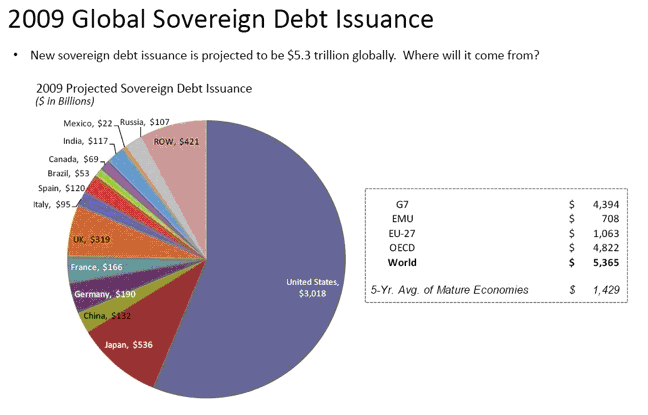
The world is going to need
to find $5 trillion to finance government debt issuance. Additionally we
need to fund private business (Corporate debt) and consumer debt.
Where is all this money going to come from?
June 8, 2009
The soaring bond yields and
mortgage rates will wreak havoc on the debt-imbued economy.
Already we saw a report by the Mortgage Bankers Association showing a drop
of 16% in the Refinance and Purchase Index for the week ending May 29th.
For an economy that has a total debt to GDP ratio of 370%, we can also
expect dire repercussions in everything from credit card loans to
municipal bonds.
Authorities can only
control (manipulate) interest rates so long...In the long run the market
forces always kick in.
Updated
January 22, 2009
In an economy saddled with
fractional
reserve banking, commercial banks are guaranteed by a central banks willing to
buy any debt securities and to
provide other loans at
below market interest rates (with money the central bank creates out of
nothing) the market restraints are replaced by opposite forces.
For most of the investors it creates a
false signal which encourages the malinvestments of capital. In other words, at
some point they discover (the real estate sector)
that their increased goods production can only be sold at distressed prices and
that this forces them into bankruptcy (examples:
the builders,
financial institutions that provided the mortgages)…
Worse is that artificial low interest rates
discourage savings and encourage borrowing on the part of the public and
encourage consumption. This is exactly the opposite of what should happen in a
sound economic system.
Massive borrowing makes credit less
available to already overextended consumers. By the time the buildings (real
estate) and capital equipment (China, India) are completed, the consumer has run
out of steam. Inventories pile up. Production is cut back. Capital good (HOCG)
orders are cancelled. Factories are closed and people laid off. Consumer demand
falls even more. Everyone has liquidity problems. The credit boom has become a
depression.
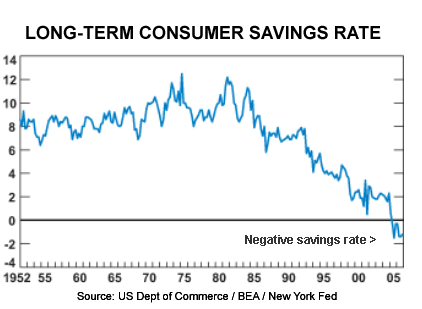
The depression also reduces the tax
revenues of government at a time where government expenditures (unemployment
compensation) increase. In other words, the government deficit grows
mightily at the very time where consumers and industry are squeezed financially.
Because of a hike in demand for money and credit, interest rates soar in a
cycle of hyperinflation and Bonds and fiat money become worthless.
January 9, 2009 -
German bond sale’s fate signals trouble ahead
By David Oakley in
London
Published: January 7 2009 13:30 | Last updated: January 7 2009 20:45
A German sovereign bond
auction failed on Wednesday as investors shunned one of the most liquid
and safe assets in the world in a warning for governments seeking to raise
record amounts of debt to stimulate slowing economies.
The fate of the first Euro
zone bond auction of 2009 signals trouble ahead as governments around the
world hope to issue an estimated $3,000bn in debt this year, three times
more than in 2008.
December 19, 2008
|
American bankers are so fearful of a
replay of the 1930's Great Depression, they've finally reached the point
of "No-return," - lending $30-billion to Uncle Sam at a rock-bottom
interest rate of zero-percent. Demand was so great at the last auction;
the Treasury could have sold four-times as many T-bills. If short-term
T-bill rates go negative, frightened bankers would effectively be paying
the US Treasury. for the privilege of lending money to it!
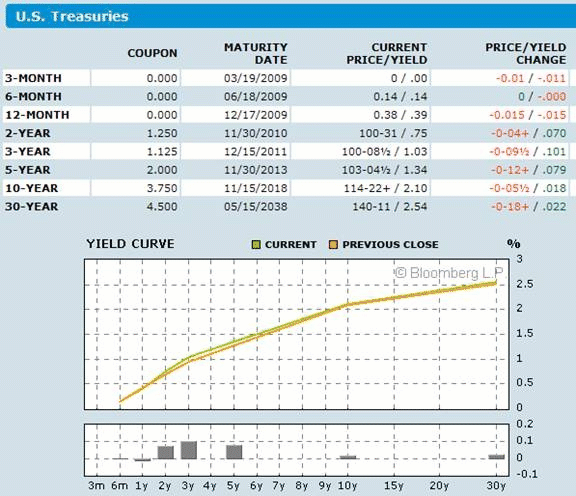
The last time short-term T-bill rates
went negative was during the Great Depression, when frightened bankers
were effectively paying the US Treasury for the privilege of lending
money to it! |
There are a number of
reasons why Treasury bond yields and the yield curve in general are likely
to rise sharply in the USA in 2009:
· Borrowing
requirements. Treasury borrowed over $1 trillion
in the year to September 2008; it is expected to borrow close to $2
trillion in the year to September 2009. That’s 13% of US Gross Domestic
Product. Not all of this is deficit; about $500 billion is refinancing and
another $500 billion is for bailout schemes, some of which the US taxpayer
may eventually see back. Still, in terms of GDP that’s far more debt than
the US capital market has ever been asked to absorb, other than during
World War II. At some point, “crowding out” must occur; we certainly
cannot assume that Asian central banks will want to take the entire load,
at interest rates less than zero in real terms.
· Inflation. The Fed appears to believe that the current
recession will bail the United States out of its inflation problem. The
example is given of Japan in the late 1990s, after which the Fed explains
that they will avoid the mistakes of the Bank of Japan, thus preventing
damaging deflation. Actually that seems to be wrong on two counts. The
main mistake in 1990s Japan was not monetary but fiscal; government
spending was allowed to expand inexorably, producing ever larger and
larger deficits. That mistake appears to be only too likely to be repeated
here. The difference is that the United States currently has a 1% Federal
Funds rate and 5% inflation, the approximate opposite of Japan in the
early years of its slump. With M2 money supply (the one the Fed will
divulge) up at an annual rate of 18.3% since the beginning of September it
seems likely that inflation will accelerate – as it did in the recessions
of 1973-74 and 1979-80.
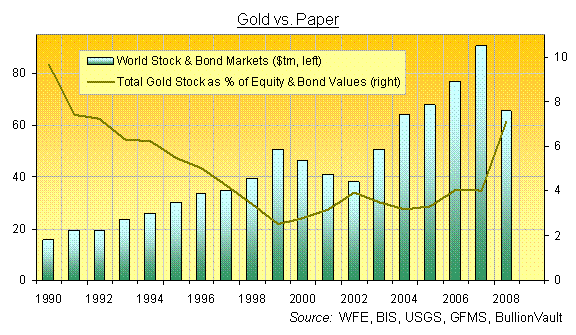
· Rising real rates of return. The yields on Treasury Inflation
Protected Securities have already risen from just over 1% to nearly 3%
since the beginning of 2008. Given the excess of bonds coming to the
market, it makes sense that real yields should rise. That in itself
suggests that conventional Treasury bonds are hopelessly overvalued
– with the 10-year TIPS yielding 2.82% and the 10 year Treasury
3.78%, the implied rate of US inflation over the decade to 2018 is 0.96%
per annum, for a total rise in prices by 2018 of less than 10%. If you
think that’s likely, I can get you a deal on Brooklyn Bridge!
Thus Treasury bond and other prime bond yields can be expected to
rise sharply in 2009. This will cause losses to their holders. To
the extent that such holders are foreign central banks, the United States
probably doesn’t need to worry. Foreign central banks have been
gentlemanly holders of US debt through periods such as 2002-08 when the
dollar has depreciated; a rise in interest rates simply gives them another
way of making a loss. Personally if I were the Chairman of the People’s
Bank of China and Treasuries had lost me the kind of money they have in
the last five years I’d probably declare war on the US, but fortunately
central bankers are a phlegmatic and tolerant lot!
However domestic holders are a more serious problem. To the extent that
pension funds have losses on their holdings of bonds, they will need to
raise contributions; to the extent that insurance companies have such
losses they will need to raise premiums. Some entities will be hedged, but
by doing so they will have simply transferred the interest rate risk to
somebody else; by definition of derivatives the total outstanding
derivatives position must be zero, however large the individual positions
taken.
Assuming the $30 trillion state, mortgage and private corporate debt
outstanding has an average duration of 5 years, a fairly conservative
assumption, and neither the shape of the yield curve nor the premiums
payable for risk alter significantly by the end of 2009, a 1% rise to
4.74% in Treasury bond rates by December 2009 would cause a total loss to
investors in the $30 trillion of Federal, agency, mortgage and prime
corporate debt of 3.9% of the debt’s principal amount, or $1.17 trillion.
Not as bad as the credit losses.
However once rates start rising, they are likely to rise much more than
1%. To cause a loss of $3 trillion, the same as the estimated credit
losses, 10 year Treasury bond yields would have to rise to 6.43%. Hardly
an excessive assumption; 10-year Treasuries yielded 6.44% on average
during 1996, at the beginning of the Fed’s money bubble, in which year
inflation was 3.4%.
More extreme moves are certainly possible. In 1990, 10-year Treasuries
yielded an average of 8.55%, while inflation in that year was 6.3%. A rise
in the yield curve to an 8.55% 10-year Treasury yield would cost investors
$5.06 trillion, almost double the credit losses from subprime and its
brethren. Should we revert fully to the days when Paul Volcker was Fed
Chairman and get the 13.92% 10-year Treasury yield of 1981, a year in
which inflation was 8.9%, the cost to investors from the interest rate
rise alone (we can assume a few additional bankruptcies, I think) would by
$9.33 trillion, about two thirds of the current value of common stocks
outstanding and more than three times expected credit losses.
One can debate the probability of the various outcomes above. Inflation is
already around 5% and is unlikely to drop much, so the 1996 estimate for
the peak 10-year Treasury yield would seem low. On the other hand, while
inflation could well reach 8.9%, it seems unlikely that we will need to
push Treasury yields quite up to 1981’s Volckerian levels, at least not
within the next year. So the 1990 estimate is perhaps the best, involving
a loss to investors of around $5 trillion or a little over. Such a loss
will produce fewer calls for bailouts than the $3 trillion credit losses,
but just as much economic damage, albeit much of it unnoticed by the
general public.
Yields are at
historic low levels.
> Back to Bonds
> Back to top of the page

Goldonomic, Florida, USA -
 +1
(772)-905-2491
+1
(772)-905-2491 |


 I
I