|
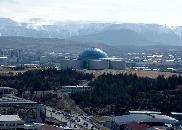 Iceland
is known for its (free) geothermal energy. Even this gift of nature was
unable to save the country form the decennia of mismanagement by the
Authorities and Banks. Iceland
is known for its (free) geothermal energy. Even this gift of nature was
unable to save the country form the decennia of mismanagement by the
Authorities and Banks.
Stunned Icelanders Struggle After Economy’s Fall
For the USA and the EU, this small island has become a
example which is a lot closer than Zimbabwe. Iceland and Ireland
experienced similar economic illnesses prior to their respective crises:
Both economies had too much private-sector debt and the banking
system was massively overleveraged. Iceland's total external debt
reached close to 1000% of its GDP in 2008. By the end of the year,
Iceland's entire banking system was crushed and the stock market dropped
by more than 95% from its 2007 highs. Since then, Iceland has followed
the classic adjustment path of a debt crisis-stricken economy: The Krona
was devalued by more than 60% against the euro and the government was
forced to implement draconian austerity programs.
The key factor in Iceland's failure has been the
monetary policy pursued by its Central Bank, in particular inflation
targeting, similar to the UK, Hungary, the EU and the USA.
The Financial times, November 13, 2009:
Eva Joly, a 65-year-old Norwegian-born French lawyer, has
none of the swagger that attended the deals made in Iceland’s heyday. Yet
it is precisely because of high finance that Joly is in Reykjavik. As one
of only a handful of investigators with any record of bringing corporate
criminals to justice, she has been asked by the Icelandic authorities to
help establish what role white-collar crime might have played in the
island’s boom and bust...
Just as the Elf case revealed a rot
at the heart of the French political system, Joly believes her latest
project will illuminate the darkest recesses of global finance. In the
years before the crash, Iceland transformed itself into an international
financial centre. The inquiry is focused on whether market manipulation
was involved in pumping up Icelandic banks’ balance sheets until they
reached 10 times the size of the country’s gross domestic product, while
the clique who ran them doled out cheap credit to some of their biggest
shareholders and to favoured foreign clients. Although the main
suspects are believed to be Icelandic, Joly makes clear that ultimate
responsibility lies as much with the culture of greed imported from Wall
Street and the City of London....click
here for the article
Iceland is the live proof that it is impossible to
control Inflation by raising and lowering interest rates. This method
simply doesn't work.
Monetary Inflation and the resulting price
inflation are the direct result of the Money supply.
Interest rates have absolutely no impact on the resulting price inflation.
They rather are a consequence of the level of monetary inflation.
Central Banks targeting inflation by raising interest rates if
inflation is above the target, and lowering them if inflation is below
target are either run by idiots or crooks.
Interest rates are a consequence of and not the origin of a monetary
policy. Interaction by the authorities will sooner or later always lead to
accidents.
In Iceland, interest rates exceeded at times 15%. In a small
economy like Iceland high interest rates both encourage domestic firms and
households to borrow in foreign currency, and also attracted currency
speculators. However, other factors (deleveraging and repatriation of
funds like we have in the USA) can result in exactly the same situation.
This leads to large inflows of foreign currency, leading to sharp
exchange rate increases, giving the Icelanders an illusion of wealth.
The end result was an exchange rate which was increasingly out of
touch with economic fundamentals. As a result, in the end a rapid
depreciation of the currency became inevitable.
 The
Icelandic banks had foreign assets worth around 10 times the
Icelandic GDP, with debts to match. Similar and worse conditions exist(ed)
in the EU and the USA. (CDO Subprime). As
long as the economy was expanding, there was no problem as the leverage
worked in favor of the Banks. However, because of Fractional Reserve
Banking, Fiat Money, the Credit Crunch and the resulting deleveraging of
the balance sheets of the Banks, the mechanism started to work in a
negative way: as a result the Icelandic banks became insolvent! The
Icelandic banks had foreign assets worth around 10 times the
Icelandic GDP, with debts to match. Similar and worse conditions exist(ed)
in the EU and the USA. (CDO Subprime). As
long as the economy was expanding, there was no problem as the leverage
worked in favor of the Banks. However, because of Fractional Reserve
Banking, Fiat Money, the Credit Crunch and the resulting deleveraging of
the balance sheets of the Banks, the mechanism started to work in a
negative way: as a result the Icelandic banks became insolvent!
The relative size of the Icelandic banking system and the monstrous
leverage made it for the government impossible to guarantee the banks.
This effect was further escalated and the collapse brought forward by
the failure of the central bank to extend its foreign currency reserves.
(The day comes, the Federal Reserve will be confronted by a similar
situation)
The final collapse was brought on by the bankruptcy
of the entire Icelandic banking system.
As a result we see the same symptoms Zimbabwe has:
Imports of goods have become impossible: shelves
are empty, the car sales have halted.
The Icelandic currency keeps on falling due to the currency
speculators running for shelter.
Icelandic households see there payments on loans increased by up
to 50%.
Inflation may reach 30% or more (60%) this year (hyperinflation)
.
Wages are frozen.
We have mass layoffs.
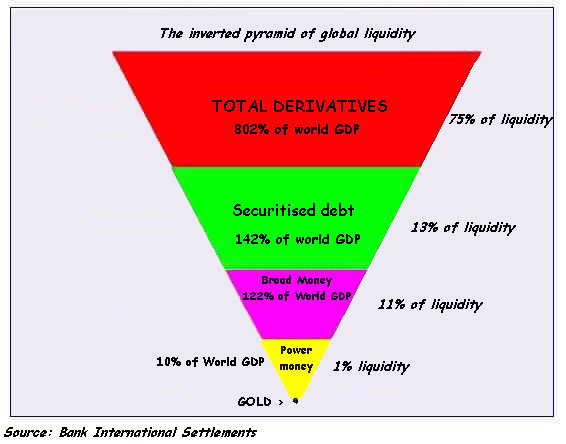
In the USA we have a similar
situation as Iceland had before the crisis started. The Dollar which
has been rising because of the Credit Crunch and deleveraging is
resulting in exactly the same situation as Iceland was in before it
all started to happen. The total size of the Derivatives (800% of
World GNP) and the trillions of freshly created money will result
into a similar situation. Ironically, interest rates in the USA are
historically LOW and this will over time prove it is impossible
to control Monetary Inflation and the resulting price inflation by
adjusting the Interest Rates.
Iceland’s
circumstances were extreme, but there are other countries suffering
from milder versions of the same fundamental inconsistent – or at
least vulnerable - quartet:
(1) A small country with (2) a large, internationally exposed
banking sector, (3) its own currency and (4) limited fiscal spare
capacity relative to the possible size of the banking sector
solvency gap.
Countries that come to
mind are:
Iceland: downfall of 'a foolish little nation'
Neil Tweedie - 06 Feb 2009
The shockwaves from the country's economic
implosion are being felt in Britain, but the effects are far worse
at home.
Iceland's humiliation begins at Heathrow. Try
buying the currency, the krona, at Travelex and you will discover it
is no longer held. "And whatever you do," says the woman at the
counter, "don't bring any back." The words "failed state" bring to
mind ungovernable Third World hell-holes, but Iceland is a new kind
of failed state, a financially failed one. Without cash from the
International Monetary Fund it would be as near to bankrupt as a
country can be.
The latest aftershock was felt in Britain this
week when the holding company Baugur, with stakes in a string
of British high street chains, went into administration. The group,
which has major shareholdings in House of Fraser, Iceland, Hamleys,
and Mappin & Webb, collapsed with debts of more than £1 billion. The
future of 3,500 stores and some 50,000 jobs is in doubt.
However, the turmoil engulfing Iceland's economy
is far from evident on arriving at Keflavik airport, 40 minutes'
drive from the capital, Reykjavik. The air is clean, the roads good
and the houses that dot the stark volcanic landscape well
maintained. The cars are big, too: four-wheel drives and high-end
marques. But then the stories begin. The taxi driver on the Keflavik
run was in his sixties, respectable, softly-spoken and, to all
intents and purposes, bankrupt.
"I keep on working and pay what I can. The
bank knows I can't do more. There is no point in shutting me down."
His tale is similar to thousands of others. He had
needed a new car and went to his bank for a loan – Icelanders, for
so long a frugal people dependent on fish and agriculture, have
become as addicted to debt as the British. His lender
suggested using a "currency basket", made up of different strong
currencies, to buy a secondhand Cadillac from America because the
krona was weak. The little currency had suffered from volatility in
the past but no one predicted what came next. In October,
the banking system imploded under the weight of an enormous mountain
of debt. The three big banks had boasted assets many times the size
of the country's GDP, but their liabilities were of a similar order.
When the government nationalized the banks, it was left with
liabilities in excess of $60 billion (£40 billion), more than three
times GDP. The krona nose-dived and borrowers like the taxi
driver woke up one cloudy morning to discover that, in krona terms,
their loans had doubled in size. With the krona effectively
dead, the country has been forced to seek the shelter of a bigger
currency – probably the euro.
There were other shocks in store. Inflation
soared as import prices rose, hitting the many mortgages in Iceland
that are index-linked. Repayments went through the roof and the
overheated housing market collapsed. Unemployment soared
towards 10 per cent. The construction industry seized up. Now,
lifeless cranes dominate the skyline of Reykjavik, monuments to
hubris.
The banks had done something else besides lending
money they did not have. Thousands of Icelanders had been persuaded
to swap bank deposits for what were effectively stakes in the banks
themselves. For them, the banking collapse threatened personal ruin.
"Many people who live in beautiful houses and drive beautiful
cars are completely broke," says political commentator Egill
Helgason. "None of it can be sold, they have lost their jobs. People
look wealthy, but worry about the next meal."
Iceland's fall from grace has been swift. In 2005,
it was ranked in the top 10 in the world in terms of GDP per head,
and between 1996 and 2006 its economy grew by 50 per cent. It has
routinely figured near the top of the human development index, which
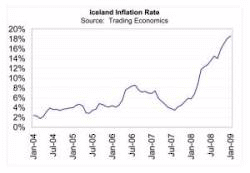
combines economic and social measures. Now, interest rates are 18
per cent and inflation 20 per cent; and each man, woman and child
could owe as much as $250,000 to foreign creditors.
Tear gas had been used in Iceland only twice
before last month – in 1949, during protests against Iceland's
membership of Nato, and in 1959, when a dance in a remote fishing
town in the north turned into a riot.
Icelanders are not given to public demonstrations,
but last month a mob pelted eggs at the car of the prime minister,
Geir Haarde. Out came the tear gas and out went Haarde's
Right-leaning coalition government. The Left-wing coalition now
serving as a caretaker government, until elections in April, is
headed by 66-year-old Johanna Sigurdardottir.
Respected rather than loved, she is a traditional
Left-winger. Except for a few traditionalists in the backwoods, no
one cares that she is a lesbian, having swapped the father of her
children for her current partner. What matters is that she harks
back to another world, before the rise of Iceland's mini-oligarchs,
the group of 30 or so men and women who, from the mid-Nineties, took
an isolated, conservative society and transformed it into a
freewheeling outpost of capitalism. Some are well known in Britain.
Jón Ásgeir Jóhannesson, 41, typified the new elite, the so-called
Viking Conquerors. He set up a supermarket chain which blossomed
into Baugur. As his wealth grew, so did his ambition. He acquired a
yacht, a house with a bullet-proof panic room and a beautiful wife,
Ingibjörg Pálmadóttir. Her customised Mercedes is known in Reykjavik
as the "white pearl". A conviction for false accounting did him
little harm, but the banking collapse did.
The other big Icelandic name in Britain is
Björgólfur Gudmundsson, who snapped up West Ham United. His son Thor
was the original Icelandic success story, making millions from a
brewing venture in post-Soviet Russia.
The "Vikings" thrived because of the intimacy of
society. The political and financial worlds in Reykjavik are
intertwined – it is said in Iceland that by the age of 50 you will
have met half of the 320,000-strong population. When the three main
banks were privatized in 2002, the business elite assumed control,
turning them from sober institutions into aggressive vehicles for
venture capitalism. The banks were used to financing foreign
acquisitions and the domestic companies of their main shareholders.
Iceland's financial supervisory system was primitive and the media
silent – most of it having been bought up by the Vikings. No one
asked where the money was coming from. The seemingly unlimited
amounts of cash led to suggestions that they were drawing on "funny
money" from Russia. The allegations, so far, have not been
substantiated.
'The madness started with privatization of the
banks in 2002 and their transfer to the cronies of the political
parties," says Helgason. "The true worth of the banks and the
companies they were feeding with loans became obscured. Anything and
everything was used to boost balance sheets.
"There is a market for cod fishing quotas," adds
Helgason. "A kilo of cod was sold for 4,000 krona in this market. If
you went to a shop you could buy it for 1,200 krona. So the cod
swimming in the sea was worth more than cod that had been caught –
madness."
The madness threatened dire consequences for
British savers when Landsbanki, one of the three big banks, set up
the internet operation Icesave, offering very competitive interest
rates to European savers, including many individuals, councils and
charities. When it collapsed, Gordon Brown used anti-terror
legislation to freeze the UK assets of Landsbanki and another
Icelandic bank, Kaupthing.
For Icelanders, the classifying of their banks
with organisations suspected of funding al-Qaeda was an insult too
far.
Iceland's foreign minister Ossur Skarphedinsson is
still shocked by Brown's actions. "Iceland has always looked on
Britain as a helping hand, except during the cod wars. In your
darkest hour in the Second World War, we offered you the use of our
country. No one in Britain knows that Iceland lost proportionally
the same number of people as America in the war. [Many lives were
lost on Icelandic ships after its occupation by British and, later,
American troops.] To suffer the humiliation of having a friendly
country stigmatising you as terrorists was terrible. It was a
disgusting thing to do."
A special prosecutor has been appointed to
investigate the banking collapse. One of his jobs will be to
discover the fate of assets thought to have been transferred to
off-shore accounts by some businessmen shortly before the crisis.
Rumours abound in the still chic bars of Reykjavik's small centre
about billions salted away overseas.
Icelanders are a stoic lot, though, and the
feeling in the hot pools where people congregate, is that the nation
will, as always, pull through – helped by cheap geothermal energy,
healthy fish stocks and a beautiful, if forbidding, landscape,
attractive to tourists.
However, the days of hubris, of the Icelandic
David taking on the Goliath of international finance, are over.
"People don't want blood, but they want the truth," says Helgason.
"In the end, we were a foolish little nation who thought we had
found some new way of making money. We hadn't."
|


 +1
(772)-905-2491
+1
(772)-905-2491